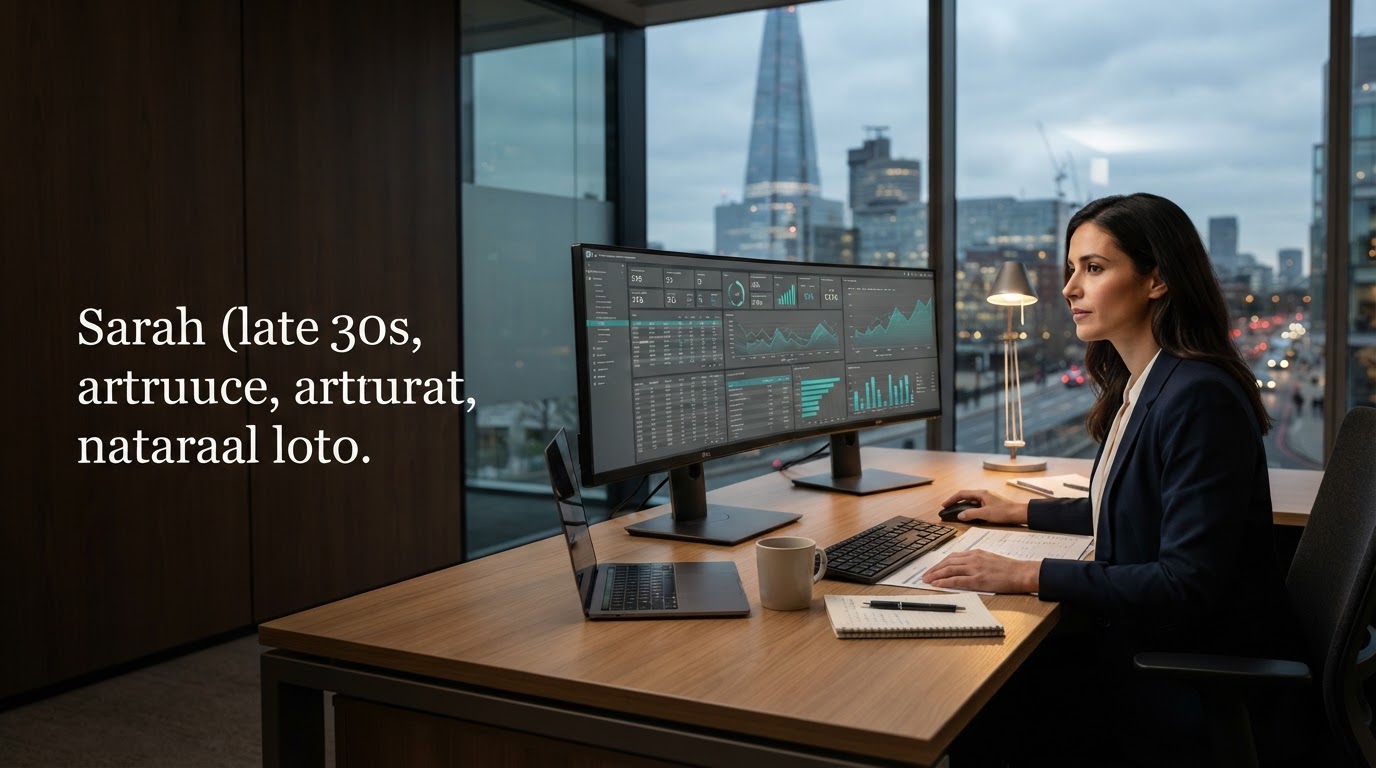
Built for people who need to trust their inputs, not just their outputs
Azinixia started as a small internal tool for filtering noise out of market data. It became a discipline: verify first, model second, decide last.

A response to unreliable data, not a trend
Azinixia was created because too many analysis tools optimised for speed and volume while treating data quality as an afterthought. We took the opposite approach: build the verification layer first, then let modelling and automation sit on top of it.
That ordering still shapes how we build today. Every feature added to the platform has to answer a simple question — does this make the underlying data more trustworthy, or does it just make the output look more finished?
Give decision-makers a clear line between fact and inference
Our mission is straightforward: reduce the gap between what the data actually shows and what a report claims it shows. We do this by making the verification process visible, not hidden behind a polished dashboard.
Traceable inputs
Every figure that reaches a model can be traced back to where it came from. If a source can't be checked, it doesn't get treated as fact.
Separation of signal and noise
We build systems that flag uncertainty instead of smoothing it away, so users know exactly how much weight a conclusion can bear.
Decisions over dashboards
Analysis exists to support a decision, not to fill a screen. Our outputs are built around the action a user needs to take next.
Restraint by design
We would rather show less and be right than show more and be uncertain. That trade-off is deliberate, not a limitation we're working around.
What guides how we build and operate
- Verifiable data before automated conclusions
- Transparent methodology over black-box scoring
- Plain language explanations, no inflated claims
- Security treated as infrastructure, not a feature
- Slow, deliberate feature releases over rushed updates
- Direct accountability for what the platform reports
A small, focused group rather than a large, generic one
Azinixia is run by a compact team that works across data engineering, analysis, and platform security. We stay deliberately small so that every person involved understands how the system behaves end to end — there is no layer of the product that nobody on the team can explain.
We don't publish individual profiles or headcounts here, because what matters to the people who use Azinixia is the discipline behind the work, not the org chart. If you want to understand how a specific output was produced, that's a conversation we're glad to have directly.